

the cost of connection
why some relationships leave us nourished,
and others leave us emptied

Lately, in conversations with women about dating and relationships, I’ve noticed a theme that keeps surfacing, this undercurrent of feeling drained. It comes up over coffee, on hikes, in group chats, in evening texts where we compare notes about what it costs to be in connection. I find myself sitting with it more as I casually date, not because it defines every experience I’ve had, but because it seems to be part of a larger story women are telling. And I can’t help but wonder what it means, not just for me, but for all of us who are trying to create relationships that feel connected, reciprocal, nourishing, honest, and alive.
That said, it’s almost embarrassing to admit that I’ve been plugged back into social media again after taking an intentional break from it. What I find fascinating is that after sharing a few funny memes about the trials and tribulations of modern dating with girlfriends, the algorithm has somehow decided to tell me that men drain women’s energy. Reels, memes, half-jokes, all pointing at the same thing: the sense that heterosexual men “plug in” to women like a charger, siphoning energy and leaving us to recover. It’s funny until it isn’t. In fact, if you’ve ever left a date, a bed, or even a casual conversation feeling depleted instead of nourished, you know the meme has legs.
And it’s worth naming that this isn’t only a heterosexual story. The drain can appear in queer relationships, friendships, family systems, and even workplaces. Anywhere one person is asked to carry the emotional, mental, or energetic load while the other coasts. Energy imbalance isn’t bound by gender or orientation; it’s a human dynamic. Which makes it even more important to ask ourselves, regardless of who we love or how we identify, how we want to share responsibility for care, intimacy, and presence in the connections that matter most.
Now bear with me, because this is where I may lose some of you. And as someone who very much believes in science, and was a social science major, I think there is something to this notion that women, in particular, have always known in our bones when something feels off. The ancients even told stories about it. Lilith, who refused to submit to Adam, was cast as a demon, a thief of male vitality, was cast as a demon, a thief of male vitality, when in truth, she was simply withholding her energy. Succubus myths warned of women who drained men at night, but let’s flip the lens: why did cultures imagine women as the danger, when in practice it has so often been women left exhausted or victimized?
Even Victorian doctors claimed women’s energy was unstable, prescribing “rest cures” for hysteria, while men went on to colonize and pillage land, raping women, siphoning labor, sex, devotion, and silence. Then there are the quieter archetypes, hiding in plain sight: the muse who feeds the genius, the wife behind the great man, the young arm candy, the mother as the endless well. Women as fuel, men as flame. The story has been rehearsed so many times throughout history, it runs in our nervous systems. What do we do? We over-give, they under-offer, and the drain feels normal.
Science, of course, gives it language. Emotional labor. Co-regulation of the nervous system. Attachment dynamics that leave women carrying the weight of the connection while men get to coast or simply check out. Studies can chart cortisol levels and brain patterns, but what they can’t measure is the unbelievable raw ache of realizing your attention, your softness, your creative spark, your care, your generosity, has been treated as an infinite resource for the taking. Maybe that’s why the internet keeps circling this idea, turning it into memes. The joke is really a kind of survival spell, a reminder whispered between women: watch who plugs into your energy. Watch what it costs. Watch what you get in return.
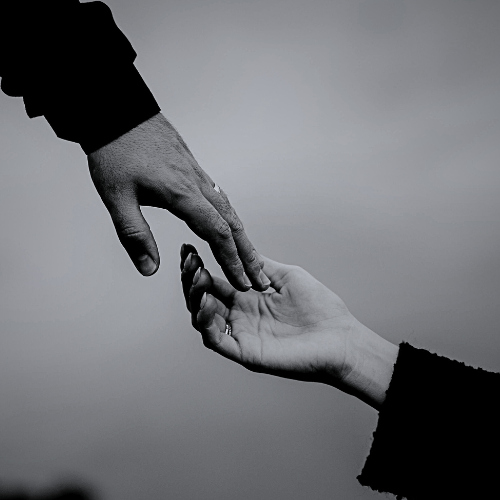
We know, of course, that not all men drain women of their vital life force. I have plenty of male friends who are feminists to support this. However, I do think it’s important to bring consciousness to how we endeavor to date, to relate, to be in relationship, and partnership with one another. Consciousness changes everything. Reciprocity changes everything. Committing to do real work on ourselves, to grow, and evolve as a human changes everything. Still, we can’t pretend the drain isn’t real. We’ve felt it across centuries, across bedsheets, across boardrooms, across the dinner table, and across text messages, or a lack thereof.
As I continue to casually date and bring more consciousness into how I date, the question I keep arriving at is not about whether a man will source my energy, time, and attention—rather who and where I want to direct my energy, time, and attention. What I think is worth noting is that there is a large contingent of women, single or partnered, who realize the gig is up. We are no longer tolerating the company or attention of someone who is half-hearted and half-ass. Half-ass in their integrity, intention, honesty, and commitment to learn to communicate better, and truly work on themselves.
By no means am I asserting that all women are working on themselves and that men don’t have their fair share of valid reasons for not being emotionally equipped to handle the emotions of their partners, let alone their own, or that it isn’t harder for men to be emotionally open and vulnerable with their male counterparts. It’s just that women are tired of the excuses and lack of self-awareness. Not to mention that generally, women often tend to carry a disproportionate load in relationships. And when you are used to noticing, being curious, asking questions to bridge intimacy, tending to someone’s emotional wellbeing, and you’ve found yourself in relationship with someone who doesn’t reciprocate or meet you in your own need, and you’re taxed with expending the mental and emotional energy just holding the dynamic together—the drain is real.
Questions to carry: Which relationships in your life leave you nourished and which leave you depleted? Where are you giving energy out of habit, and where are you offering it with intention? How do you know when you feel truly met in connection, and how do you honor that knowing? What would it look like to invest your attention where it’s reciprocated, rather than where it’s extracted?
© Alana Foy 2025